Rust solo survival turns 14 days into a five-hour movie worth watching for base design and raid lessons
You can order the same kind of articles for your own video to boost it on YouTube and Google. Just message the Telegram bot @sat_sit_bot. It writes articles around your video, embeds the video and publishes them on popular niche websites (no ads). Free trial — 50 articles.
· based on the channel Blooprint
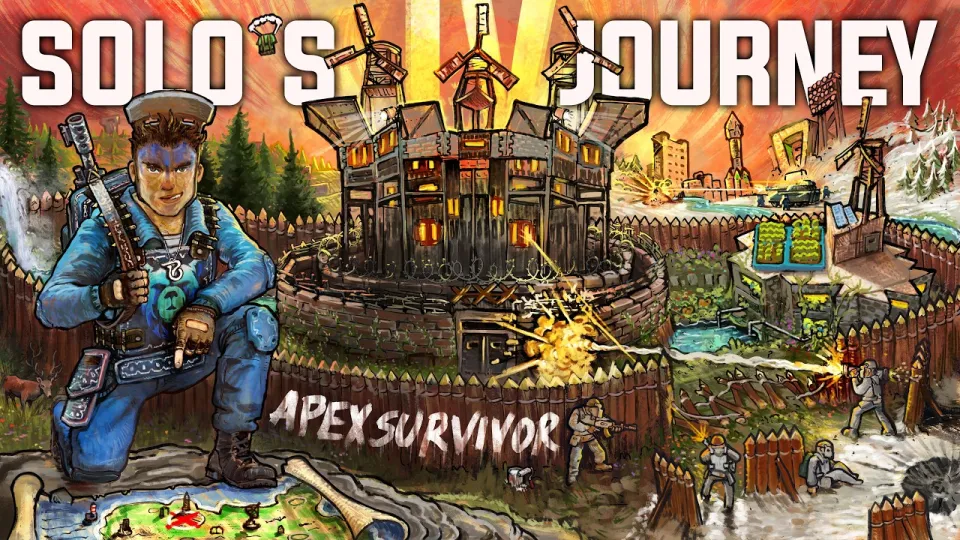
Rust solo survival is a test of patience, planning and diplomacy, and the clearest recent demonstration of that is Blooprint's 14-day solo run, released as a single movie of roughly four hours and fifty minutes. The video covers one uninterrupted long wipe, from first spawn to late-wipe raids, and the creator built a companion tracker at solosjourneytracker.com so viewers can type in a timestamp and see exactly where the challenge stood at that moment. Filming and editing the project took more than 300 hours, and it doubles as the channel's 2.5 million subscriber milestone release.
What the 14-day solo Rust run actually covers
The movie is structured as twelve numbered chapters plus an introduction and a finale, and each chapter maps to a stage of a long wipe rather than a single session. Early chapters handle the fragile opening: finding a build spot, getting a starter base down, and surviving the first nights when a solo player has no backup and every roaming group is a threat. Middle chapters shift to economy, with farming, scrap generation and monument runs that fund blueprints and gear. Later chapters move into the part most solo players never reach: sustained PvP, base expansion, and raids against groups that outnumber the protagonist.
The scale is the point. A normal Rust wipe on a monthly server lasts up to a month, but most players quit within the first few days, so a 14-day solo commitment on one server produces the kind of progression arc a short video cannot show. The 300-plus hours of editing exist because that arc needs context: base layouts, blueprint decisions and rivalries only pay off when the viewer sees them build across days.
Why the tracker website changes how the movie is watched
The timestamp tracker is the most practical feature of the release, because a five-hour video is hard to watch in one sitting. The site accepts a timestamp from the video and returns the state of the run at that point, which means a viewer who returns after a break can reorient without rewatching hours of footage. It also works as a progress checklist for anyone attempting a similar solo challenge: you can compare your own day-by-day position against a player who finished 14 days.
For solo players, that comparison is more useful than any highlight reel. Rust progression is not linear, and seeing which day a monument becomes viable, when a second base goes up, and how late a player can delay raiding is concrete data.
Base design lessons from a triangle core farm base
The base in this run is deliberately not meta, and that is what makes it instructive. Instead of copying the popular bunker-heavy designs, the build leans on a triangle core and prioritizes farming throughput over raid cost. A triangle core spreads loot across more compartments, which makes a single breach less catastrophic, and it is cheaper in upkeep than sprawling square layouts at the same footprint.
Practical takeaways for a solo base in Rust:
- Build for the farm you actually do, not the farm you plan to do; a base that supports constant resource flow beats a fortress you cannot upkeep.
- Keep the core small and compartmentalized so one explosive charge does not expose everything.
- Separate your crafting and storage from your sleeping quarters so a raid does not end the wipe.
- Use cloning and farming infrastructure early, because a solo player's real bottleneck is time, not skill.
Cloning gets specific attention in the run, and it deserves it: plant genetics let a solo player turn a small footprint into a steady supply of cloth, food and low-grade fuel without long farming trips that leave the base undefended.
Oil rig, cargo ship and the solo risk curve
Monuments define the risk curve of a solo wipe, and the run treats oil rig and cargo ship as milestones rather than errands. Both are high-value targets that attract groups, so timing matters more than gear: hitting an oil rig at low-population hours or right after a server event pulls players elsewhere is often the difference between a full inventory and a death screen.
A few rules that hold up for solo monument runs:
- Scout before you commit; a parked boat or a nearby base tells you who else is awake.
- Bring only gear you can lose, and stage loot in a nearby stash or boat before extracting.
- Treat cargo ship as a movement puzzle, not a firefight, and leave before the counter-run arrives.
- Bank progress immediately; a successful run that ends in a lost fight is worth nothing.
The movie's later chapters show why this discipline pays off: the player who survives monuments consistently is the one still relevant on day ten.
Raids, revenge and clan politics in a long wipe
Solo Rust is a social game disguised as a shooter. The run's most discussed sequence involves a large clan raid that viewers widely considered deserved, and it lands because the movie spends hours establishing the friction first. Revenge raids in Rust are rarely about loot; they are about removing a group that makes your map unplayable. For a solo player, the decision to raid is an economic one: explosives cost sulfur, sulfur costs farm time, and a failed raid hands a group a reason to siege you.
The practical lesson is sequencing. Raid the neighbor who harasses you while they are offline or distracted, keep the raid short, and move loot the same night. Long sieges favor numbers, and numbers are the one thing a solo player never has.
Common viewer questions about a five-hour solo movie
A long runtime raises fair doubts, and most of them come down to pacing and honesty. Viewers regularly ask whether a nearly five-hour video drags; the chapter structure and the tracker answer that, since you can watch one chapter, check progress and return later. Others ask whether a 14-day run is realistic for a normal player: it is, but only with a schedule, because the challenge is maintaining momentum across real-life days rather than playing perfectly.
A third recurring question is whether the base design is actually viable or just entertaining. It is viable for a farmer who values throughput and compartmentalization over maximum raid cost, and it is a poor fit for someone who wants to store everything in one armored room. Finally, players ask how much of a solo wipe is diplomacy. The answer visible throughout the run is a lot: knowing which clans to avoid, which neighbors to trade with and when to stay offline is as important as aim.
Useful links from the release
- Progress tracker for the challenge: https://solosjourneytracker.com
- Blooprint vinyl figure: https://youtooz.com/products/blooprint
- Solo's Journey mousepads and playmats: https://epicdesk.shop/collections/blooprint
- Animated intro studio: https://x.com/highresolution0
- Thumbnail artist: https://twitter.com/veys_el_kara
Final takeaway
Rust rewards the player who plans a wipe as a campaign rather than a session, and this movie is the longest, most detailed argument for that approach available on the channel. The 14-day solo format works because every mechanic, from cloning to oil rig timing to revenge raids, gets enough screen time to show its consequences. Blooprint's editing turns a grind into a narrative without hiding the grind, which is why a four-hour-fifty-minute runtime reads as a feature rather than a failure of pacing. If you want to follow the run step by step, start with the tracker at solosjourneytracker.com and jump to the chapter that matches your own wipe progress.
Key takeaways
- Blooprint survived 14 real days solo in Rust and released the run as a single movie of roughly four hours and fifty minutes.
- The edit and filming took over 300 hours, and the video marks the channel's 2.5 million subscriber milestone.
- A companion website, solosjourneytracker.com, lets viewers enter a timestamp and see the exact progress of the challenge at that point.
- The run is split into twelve chapters plus an intro and a finale, moving from early wipe survival to late-wipe raids and revenge.
- Recurring themes in viewer discussion are the off-meta triangle core base, cloning for farm efficiency, and a large clan raid that felt deserved.
Source: Rust - A Solo's Journey IV: Apex Survivor (Movie) · Markdown version
Questions & answers
How long is the Rust solo movie and is it worth watching in parts?
The movie runs about four hours and fifty minutes across twelve chapters plus an intro and finale. It is designed to be watched in parts: each chapter covers a stage of the wipe, and the companion tracker lets you check the state of the run at any timestamp before continuing.
Is a 14-day solo Rust run realistic for an average player?
Yes, but the limiting factor is schedule rather than skill. Surviving 14 days solo means logging in consistently, keeping upkeep paid, and avoiding fights you cannot win; players who can only play a few hours a week will usually lose their base to decay or offline raids first.
What makes the triangle core farm base different from meta designs?
A triangle core spreads loot across more compartments and costs less upkeep at the same footprint, which suits a solo player who farms constantly. It sacrifices some raw raid cost compared with bunker-heavy meta builds, so it is a poor choice if you store everything in one room.
Why do solo players prioritize oil rig and cargo ship runs?
Both monuments produce high-value loot that accelerates blueprint and gear progression, which a solo player cannot match through farming alone. The risk is that they attract groups, so timing the run around low-population hours and banking loot early matters more than the gear you bring.